The Panel Placement Mistake That Kills Your Solar ROI
Ask most homeowners what makes a solar system "good," and they'll answer with a number: how many panels fit on the roof. More panels feels like more power, and more power feels like more savings. But solar panel placement is where otherwise reasonable-looking systems quietly lose value, and the mistake is almost always the same one: treating layout as an afterthought instead of the decision that determines whether those panels actually produce what they're capable of. A design built around maximum panel count, without accounting for orientation, shading, and how the roof's geometry interacts with the sun over a full year, can leave real production — and real return on investment — on the table.
This is the single most common way a solar quote looks impressive on paper and underperforms in practice. Below is what actually goes into good panel placement, why "more panels" isn't the same as "more savings," and how seeing your roof in full 3D — rather than a flat satellite image — makes the difference visible before you commit to a design.
Why Panel Count Became the Default Metric
Panel count is easy to sell and easy to compare. A quote that says "24 panels" feels concrete next to one that talks about azimuth and shading curves, so panel count became the shorthand many homeowners use to judge a proposal. But panel count says nothing about where those panels sit, which direction they face, what shades them at different times of day and year, or how they're wired together. Two systems with an identical panel count, on the same roof, can produce meaningfully different amounts of usable electricity over a year depending entirely on placement decisions.
The point of a solar system isn't to hold the maximum number of panels a roof can physically fit — it's to convert as much of your roof's solar potential as possible into electricity that actually offsets what your household uses, at the times you use it. Optimizing for the wrong one of those goals is the mistake that quietly caps your return.
The Placement Factors That Actually Determine Output
Good panel placement is a design problem with several interacting variables, not a single number. The table below outlines the main factors a proper design accounts for.
| Factor | What it affects | Why it's often missed |
|---|---|---|
| Azimuth (compass direction) | Direct sun each panel receives across the day | Assumed "good enough," not modeled per roof plane |
| Tilt | How well sunlight hits the panel across seasons | Fixed to roof pitch without checking the plane is worth using |
| Shading (trees, chimneys, vents, adjacent planes) | Losses at specific times of day/year, sometimes a whole string | Hard to see from a flat photo; changes with seasons |
| String and inverter configuration | Whether one shaded panel drags down a whole group | Applied after panel positions are already picked |
| Roof plane selection | Whether a section is worth using, or better left empty | Overridden by the instinct to fill every surface |
| Usage pattern and rate structure | Whether production timing matches use/export windows | Rarely considered until after the system is designed |
None of these factors work in isolation. A panel with a great azimuth but afternoon shading from a chimney can underperform a panel with a "less ideal" orientation but a clear view of the sky. Good placement is about the combination, not any single line item.
Azimuth and Tilt: The Direction and Angle Problem
Azimuth — the compass direction a panel faces — determines how much direct sunlight it collects over the course of a day, and that relationship changes throughout the year as the sun's path shifts. Tilt interacts with azimuth: the same compass direction at two different pitches can behave quite differently depending on how closely the panel surface tracks the sun's angle through the seasons.
The mistake in practice usually isn't ignoring azimuth entirely — most homeowners and installers know south-facing (in the Northern Hemisphere) tends to be efficient. The mistake is stopping there and assuming every section of roof with a reasonable compass direction is automatically worth filling, without checking tilt, shading, and how that section's production lines up with the rest of the array and the household's usage.
Shading: The Factor a Flat Photo Can't Show You
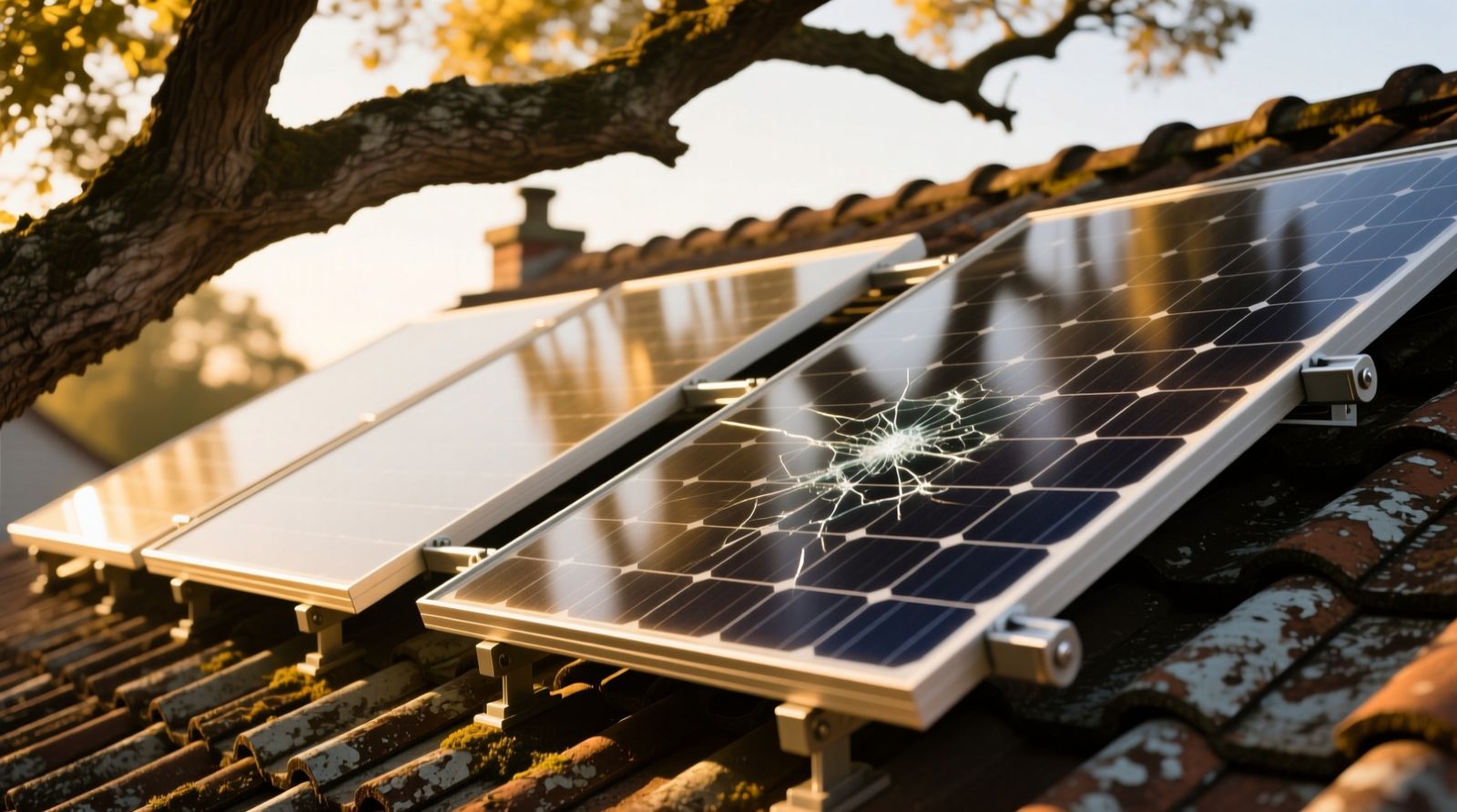
Shading is the hardest factor to evaluate from a 2D satellite image, and one of the most damaging to get wrong. Trees, chimneys, roof vents, dormers, and other sections of the same roof can cast shadows that move throughout the day and shift across seasons as the sun's angle changes. A tree that seems irrelevant in a summer photo can throw a long shadow across the roof in winter, when the sun sits lower in the sky.
The real damage isn't just the shaded panel losing output — depending on how the system is wired, a single shaded panel can reduce the output of an entire string connected to it. Shading analysis has to account for the whole year, and it has to be checked against the actual electrical design, not just the visual layout.
String Design and Roof Plane Selection
Panel placement and electrical design aren't separate decisions — they're the same decision viewed from two angles. How panels are grouped into strings, and which inverter or optimizer configuration is used, determines whether a shaded or differently-angled section drags down panels around it or is isolated so the rest of the system keeps performing normally.
Filling every available section of roof with panels feels efficient, but a plane with poor orientation, persistent shading, or a steep tilt mismatch can add cost without adding much usable production. Sometimes leaving a marginal section empty produces a better-performing system than maximizing total panel count — a design has to weigh whether a given roof plane earns its place, not just whether it has room for hardware.
Matching Production Timing to Actual Usage
Placement also has to account for when a home uses electricity, not just how much total sunlight the roof receives. A household's usage pattern, combined with time-of-use utility rates and net metering export rules, changes which orientation delivers the most value. An array angled toward morning production may suit a home with high early-day usage, while afternoon-weighted production may better match a home that draws more power later in the day — and utilities that pay different rates for exported power at different times make this alignment even more consequential.
This is a genuinely site- and household-specific calculation, and it's part of why placement decisions that look fine on a generic template can be a poor match for a home's actual energy profile — a theme also explored in 5 solar myths that are costing homeowners real money and in why roof shape matters more than most homeowners think.
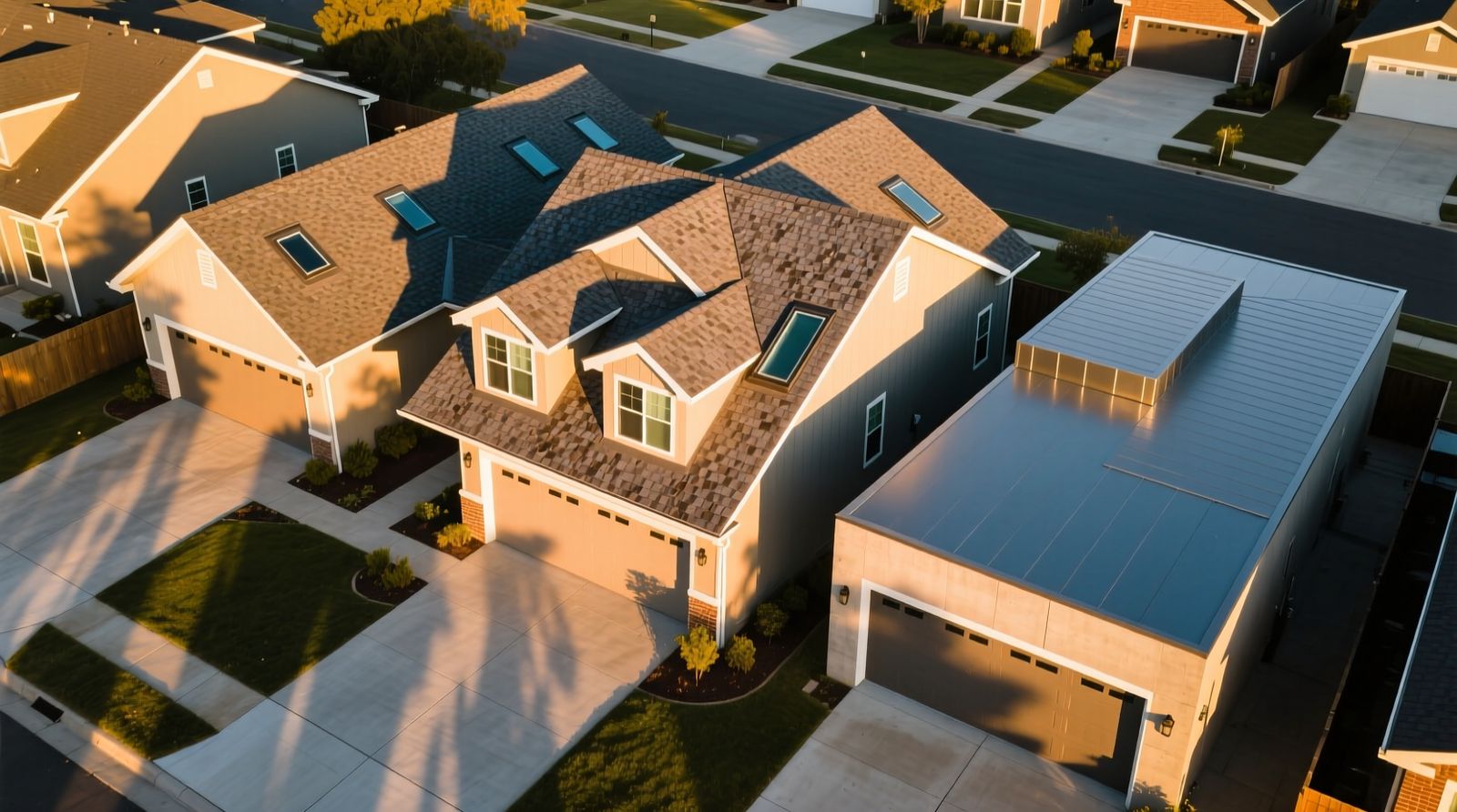
Why a Full 3D Roof Model Changes the Outcome
A flat, satellite-only estimate can tell you roughly how much roof area you have and give a rough panel count, but it can't reliably show seasonal shadow paths, the true pitch and orientation of each roof plane, or how obstructions like chimneys and vents interact with the sun across the year. That gap is why an early estimate and a final permitted design can diverge so much — a pattern examined in satellite solar estimates vs. real installs.
A full 3D roof model closes that gap before a design is finalized. Modeling the roof in three dimensions lets a designer — or a homeowner reviewing options — see real shading and obstructions on each plane, test layout options against those constraints, and evaluate string and inverter configurations against the roof's actual geometry, rather than a rough visual approximation. That's the difference between optimizing for panel count and optimizing for real, long-term production and system value. It's also what makes a 3D-verified design faster to move through permitting, since the documentation reflects a roof already modeled in detail — see the 3D design trick that's cutting permitting time.
Once placement is optimized, sourcing equipment and installing it correctly matter too. Equipment sourcing can connect to a supply chain like Stockup, and installation to a vetted partner like ProDone, but neither step compensates for a layout that was never optimized for real conditions. Placement is the foundation everything else is built on.
Frequently Asked Questions
Q: If two quotes have the same panel count, will they produce the same electricity? A: Not necessarily. Panel count ignores azimuth, tilt, shading, and string wiring — identical counts on the same roof can produce meaningfully different real-world output depending on placement and electrical design.
Q: How much does shading matter if it only affects part of the day? A: More than expected — depending on the wiring, a shaded panel can drag down an entire connected string, not just its own output. Shading must be evaluated across the full year, since shadow paths shift with the seasons.
Q: Is it ever better to leave part of a roof unused rather than covering it with panels? A: Yes. A plane with poor orientation, persistent shading, or a steep tilt mismatch may add cost without adding much production. A good design weighs whether each section earns its place rather than assuming every surface should be filled.
Q: Can a satellite-only estimate reliably show shading and roof plane detail? A: A satellite image gives a useful first look, but it's a flat snapshot that can't capture seasonal shadow movement or each roof section's true pitch and orientation. A full 3D model is built to capture that detail before a design is finalized.
Q: Does my household's electricity usage pattern affect how panels should be placed? A: Yes. Production timing relative to your usage, plus time-of-use rates and net metering export rules, can change which orientation delivers the most practical value — not just which captures the most total sunlight.
Get a Layout Built for Real Production, Not Just Panel Count
The most expensive solar mistake isn't a bad panel or a bad installer — it's a layout never optimized for your roof's real conditions. Enter your address, get an instant satellite-based estimate, and move into a full 3D roof design built around production and long-term value rather than a maximum panel count. If you're also thinking about how a well-placed solar system fits into a broader energy strategy, explore Humdo's virtual power plant solutions and smart property IoT solutions to see how good design decisions compound across your entire home.